
When Is A Universal Testing Machine Really Obsolete?
It’s no secret the mind and body change as we age. But getting older doesn’t mean the end. The same applies for your legacy universal testing machines.
If they’ve been displaying inaccurate tensile readings or enjoying substantial downtime, it’s easy to think it’s time for a change. But change (buying a new materials testing machine) isn’t always the best approach, not to mention expensive.
Sometimes, all you need to do is breathe new life into your ageing apparatus. Let’s look at how repairing and updating outdated systems and hardware provides a cost-effective alternative for restoring consistency, operational efficiency, and repeatability across your modern tensile testing laboratory.
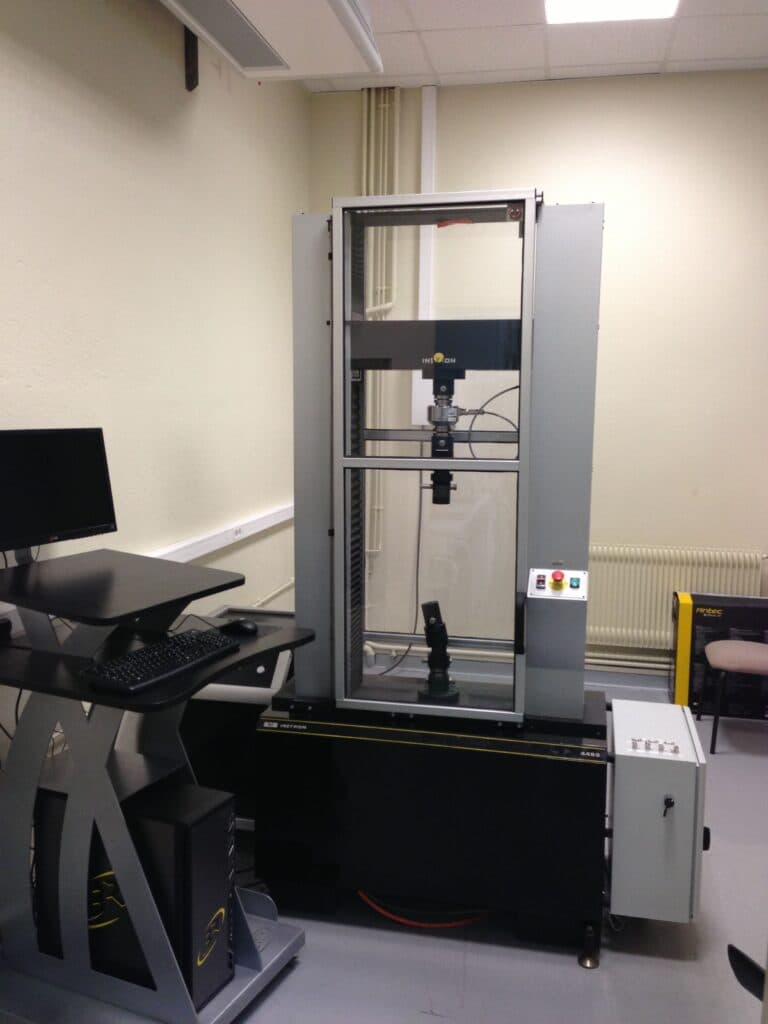
Planned obsolescence
We’d like to think no test equipment manufacturer deliberately designs and builds their machines to have limited operational lifespans or to break within a number of years of use. They are built to be substantial and long-lasting pieces of engineering, with mechanical parts like the load frame remaining robust and reliable for decades.
On the other hand, the electronic elements (microprocessors, sensors, etc.) and the computer / software attached to the machine have much shorter product lifecycles. Circuit boards are discontinued. Communication interfaces become obsolete. Computers become unsupported. Older control boards are no longer manufactured.
You’re effectively left with a fundamentally sound machine that’s considered obsolete on the basis that its electronics and control hardware are no longer commercially convenient to support.
Naturally this rears the ugly head of “planned obsolescence” and raises uncomfortable questions about how equipment lifecycles are being managed across the test instrument industry.
A legacy tensile tester is not necessarily a poor tensile tester
The age of your tensile test machine alone doesn’t determine the quality of its measurements or equate to poor repeatability. Instead, assess it on its actual performance with measurable questions, such as:
- Can its load cells be calibrated?
- Can the machine deliver the maximum force capacity and maintain the required test speed and control parameters?
- Can extension or displacement be measured appropriately?
- Can its performance be verified against applicable standards such as ISO 7500-1 or ASTM E4?
If the instrument can meet these types of requirements, it deserves a second look. Original equipment manufacturers (OEMs) and service providers should be prepared to look at an older machine and ask what it actually needs, rather than suggesting replacing the entire system because one comparatively small part of it has become obsolete.
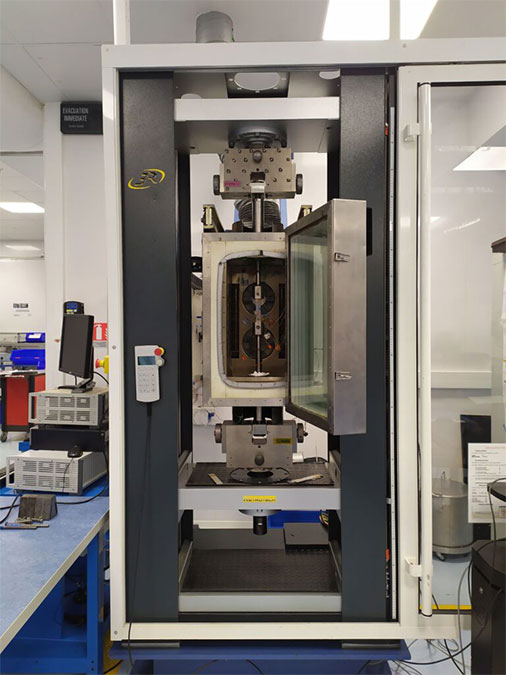
Modernised materials testing machine with upgraded fixtures, instrumentation, and protective enclosure.
Save your material test machine, save the planet
Labs invest significant sums in tensile testing machines with the fair expectation they’re buying long-term capital equipment. While old machines should never be kept alive at all costs, there’s also vast environmental benefits to consider (providing it makes sense to modernise the tensile tester rather than replace it entirely or continue to maintain the existing system).
Many industries and testing facilities are under pressure to improve their sustainability, so extending the useful life of your asset through a modernisation and retrofitting service can avoid unnecessarily waste and replacing large quantities of functioning components.
Manufacturing a new universal testing machine also comes with a sizeable carbon footprint. This requires intensive raw materials like aluminium and steel, electronics, machining, assembly, packaging, and then finally transportation to the customer. For instance, a test frame of a 100 kN universal testing machine consists of approximately 300 kg steel and just under 100 kg aluminium, which generates a hefty 2.2 tons of CO2.
A modernisation service would ensure the test frame is reused, while also eliminating those harmful CO2 emissions.
Replacement causes disruption and operator unfamiliarity
Operational continuity is often undervalued in the testing industry. Greater disruption and inconvenience are placed on maintaining old equipment, while ignoring the troubles that buying new machines can initiate.
A new tensile tester will require installation, fresh procedures, software configuration, extensive operator training, method transfer, calibration, and potentially historical data comparison. Extensometers, fixtures and grips, and other tensile tester accessories may also need to be assessed for compatibility.
This is bound to cause workflow disruption, especially for operators who have used the same system for many years and subsequently produced a wealth of test data.
Continuity is crucial for any lab, which is why a targeted upgrade is worth considering if your machine’s main infrastructure and components are still firing on all cylinders. While we acknowledge that sometimes a replacement may be the correct decision, a legacy materials testing machine fitted with a suitable modern control and measurement system can still provide superb testing performance to your required standards.
Remove the weaknesses of your legacy universal test machine
When AML Instruments come to assess older universal testing machines and other legacy testing equipment, we’re not looking to preserve archaic technology for the sake of it. We need to determine whether modernisation is technically viable, which revolves around identifying which elements genuinely need replacing and the valuable parts that need retaining.
Depending on the machine and application, this may involve upgrading components like computer interfaces, control electronics, and data-acquisition software with modern, supportable hardware.
On the other hand, sometimes all that’s needed is a simple repair. Often a machine has been condemned by an OEM and we have repaired it a relatively low cost, with the machine going on to operate for many more years.
It doesn’t matter whether your tensile test apparatus is from Instron, Zwick Roell, Lloyds, Testometric, Shimadzu, Tinius Olsen, or MTS Systems — we will never immediately discard it on the basis that the original electronics are no longer supported.
Obsolescence is not the same as deterioration. That’s why we believe labs and other testing environments should challenge the assumption that obsolete electronics automatically mean an obsolete testing machine.
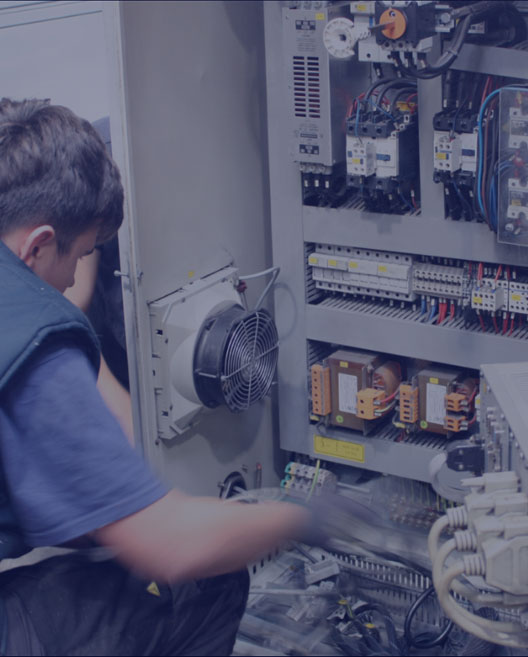
Engineer upgrading electrical controls and wiring inside a test machine cabinet during a modernisation retrofit.
Obsolescence doesn’t just impact legacy UTMs
Modern tensile testing equipment like the SYNTAX 100 offers increasingly sophisticated interfaces, automation and software features. Many of these developments can make testing simpler and enhance productivity, but advancements in technology can quicky render relatively new hardware like this obsolete.
Just be sure not to confuse the modern interface with measurement accuracy. Whether your lab is carrying our compression, flexural, or tensile testing, confidence comes from factors such as alignment, calibration, force measurement, and test speed.
Modernisation enables us to remove any limitations engendered by obsolete electronics and replace them with modern components, so it no longer feels “legacy”. We can look at constraints like ageing interfaces and data acquisition, then work out a way to bring them up to your current requirements.
This also provides an opportunity for our technicians to discuss future supportability.
Planning for long-term sustainability
The industry needs to eradicate the lifecycle mismatch between electronic and mechanical components. A relatively short-lived component should never be able to dictate the lifespan of a much more durable asset.
Incrementally updating the technology in the test system would help avoid extensive system overhauls and save laboratories considerable capital expenditure, not to mention reducing the vast quantities of steel and other metals heading for scrap.
AML Instruments are here to challenge a culture in which unsupported electronics too easily become the reason an otherwise capable machine is deemed to have reached the end of the road.
Inspection and calibration schedules are also essential to prevent performance decline overtime. This means labs (as well as OEMs) need to be proactive and not simply adapt to these issues until inefficient workflows and workarounds become the norm.
Waiting for failure is rarely a sensible asset-management strategy, but neither is assuming that the only alternative is purchasing a brand-new universal testing system.
Upgrade your UTM with AML
Before getting rid your ageing or legacy materials testing machine for scrap, your laboratory should ask:
“Is the machine actually obsolete or is it simply fitted with obsolete technology?”
If it’s the latter, we believe upgrading and modernising the instrument should be considered before replacing it. In many circumstances, replacing your entire tensile testing system is not necessarily the most economical, sustainable, or technically appropriate solution.
At AML Instruments, we’re always willing to assess older laboratory and testing equipment. Any significant upgrade will be properly commissioned, calibrated, and validated before being returned to service.
Contact us today to give your legacy machine a new lease of life.