



We’re here to help
Let us help you
Thermometers have become indispensable testing tools in today’s fast-paced world. From optimising crop growth to measuring fuel temperature and ensuring food safety, thermometer readings are taken across a diverse range of applications.
However, their readings can slowly decrease in accuracy over time, so the only way you can be certain your readings are accurate is if you’re using a correctly calibrated thermometer.
In this guide, learn how to calibrate thermometers using best practices from our expert engineers at AML Instruments — a UKAS-accredited thermometer calibration company.
The thermometer calibration process involves comparing your thermometer’s measurements with a reference (calibrated) thermometer or in a substance with a known temperature to ensure its accuracy and reliability.
You can then make the necessary adjustments to ensure your thermometer is within an acceptable degree of accuracy — this will vary depending on the type of thermometer being calibrated and its application.
Like all measuring instruments, thermometers can suffer drift over time. While calibration of thermometers is not required for all applications, a calibration certificate is the only legal document that signifies its accuracy and quality.
The need for certification will depend on the requirements of your industry or regulatory body, as well as the intended use of the thermometer.
Whether your application requires a UKAS calibrated thermometer or you just want peace of mind your thermometer will offer long-term operational reliability and performance, it’s not worth putting your operations, reputation, and customers at risk.
Calibration ensures every thermometer reading you take is reliable, traceable, and compliant.
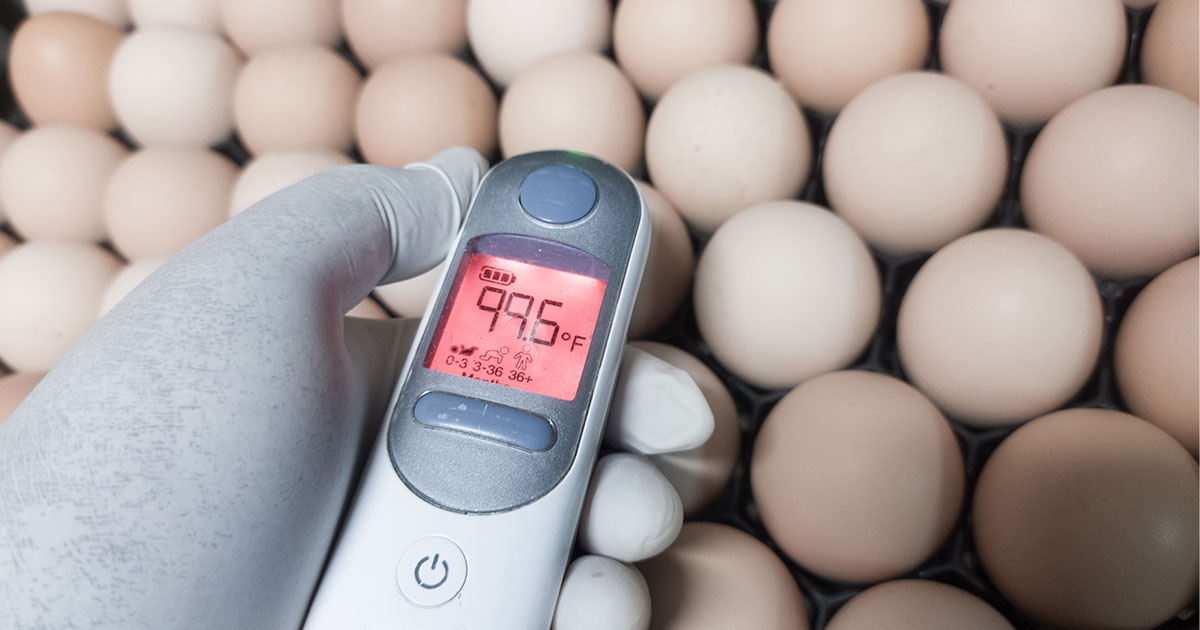
Gloved hand using an infrared thermometer to measure the temperature of eggs in an incubation tray, showing 99.6°F.
Every thermometer will come with recommendations as to how often you should calibrate it, but there are no set time parameters for when you should calibrate your thermometer(s).
For temperature measuring instruments, a calibration cycle of one year is typically recommended, but different factors can necessitate shorter intervals between calibrations.
These include:
Regular calibration is an essential practice for guaranteeing confidence in your measurements. Just think how much disruption and damage an inaccurate thermometer reading could cause to product quality in the manufacturing process. Other benefits include:
Fundamentally, there are two recognised methods for calibrating a thermometer or temperature‑measuring device:
The most widely used and one of the most efficient ways to calibrate a thermometer, the comparison method involves comparing the device under test with a high‑accuracy reference thermometer.
At AML, we use this method, typically using:
These provide stable, controlled temperatures across a wide range and allow us to calibrate a variety of probes, sensors, and digital thermometers with excellent accuracy and repeatability.
This method is used mainly by primary temperature laboratories when extremely high‑accuracy calibrations are required.
Fixed‑point cells use high‑purity materials such as:
Each material has a precise and reproducible melting or freezing point. For instance: A water triple point cell is exactly 0.01°C — the temperature at which water exists simultaneously as a solid, liquid, and vapour.
These fixed points form the basis of the ITS‑90 (International Temperature Scale of 1990), which defines internationally accepted temperature traceability.
The comparison method provides highly accurate, traceable results suitable for almost all industrial, laboratory, and manufacturing applications, including the food, pharmaceutical, engineering, and environmental testing sectors.
It’s based on the thermometer under test being compared to an already calibrated, precise reference thermometer. The thermometer is inserted into a controlled heat source (we typically use a dry block calibrator or oil bath) for comparison against a known standard.
Suitable for various thermometer types, including infrared, liquid, and resistance, other advantages of this method include its high level of accuracy and reliability; and the ability to calibrate multiple thermometers simultaneously.
Here’s a step-by-step guide to how this technique is performed:
These measurements will then be used to produce a thermometer certificate of calibration. All AML calibrations are traceable to SI units via certified standards.
Your certificates note:
This level of traceability cannot be achieved with DIY or localised check methods.
Quick-fire and far more unreliable thermometer calibration methods include the boiling-point method or ice-point method. These methods follow similar principles. The boiling-point method uses a pot of water at a rolling boil as a high-end temperature reference, whereas the freezing point of water (0 °C / 32 °F) is used as the reference point for the ice-point method.
For industries, businesses, and professionals who demand high accuracy and documented traceability, these methods have significant limitations. They only offer a single-point snapshot, masking potential drift or linearity errors elsewhere.
If you need verifiable accuracy across a range of temperatures and traceable documentation, we strongly recommend your temperature calibrations follow strict procedures using certified reference equipment and internationally recognised standards.
This depends on the intended use. If you’re only using the thermometer at 50°C, it make little sense in calibrating it at 1000°C.
As a minimum you should pick three temperatures covering the anticipated range of your application. In this example you might want to pick 40, 50, and 60°C, or if you wanted to use your thermometer over a larger range, your three temperature points could be 0, 50, and 100°C.
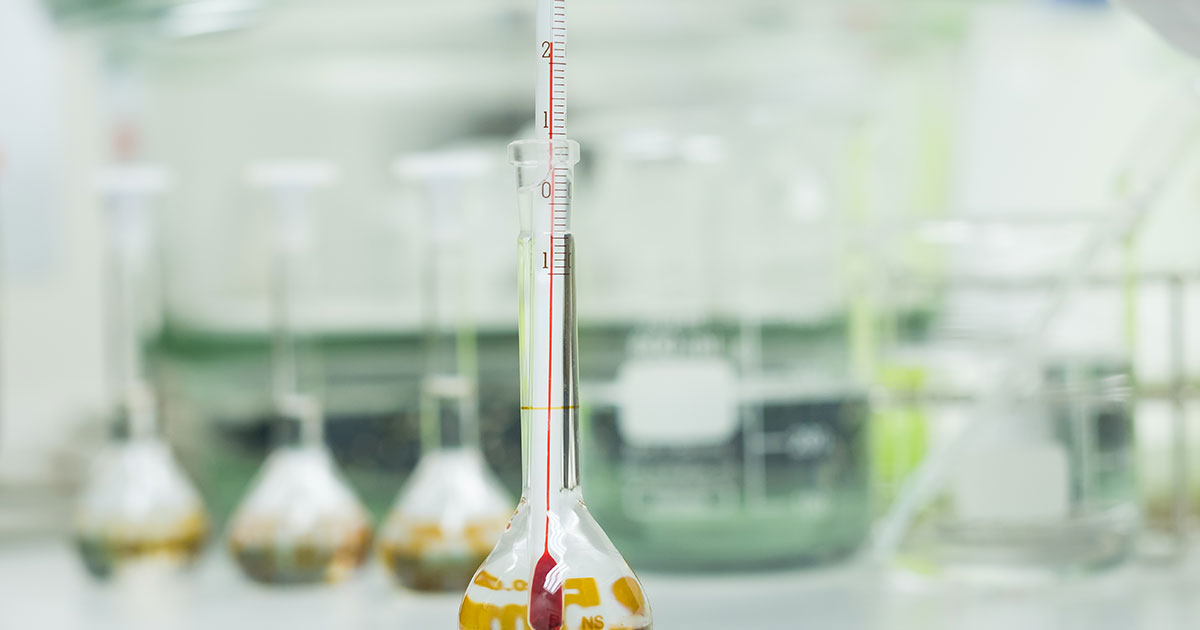
Glass thermometer measuring liquid temperature inside a volumetric flask during calibration in a pharmaceutical QC laboratory.
Thermometer manufacturer specifications and safety guidelines require formal laboratory calibration (not self-checks). Thermometer calibration comes with many challenges, so here’s eight reasons why it’s best to leave it to companies like AML, aka the professionals.
All AML calibrations are traceable to SI units via certified standards. This level of traceability cannot be achieved with DIY or localised check methods.
An accredited calibration is always guaranteed to be of high quality and ensure long-term operational reliability for your industry or application. With 40 years' experience in temperature calibration, the AML team understand the challenges faced by calibration professionals and can offer a wide range of solutions. In addition, we can supply certificated thermometers and carry out thermometer repair.
This post is not intended to replace the guidance listed in any of the national or international standards. It has been written to give an overview of the different care, procedures, and precision that go into the professional calibration of a thermometer. The standards and guides listed in this post should be consulted and understood in detail before attempting your own calibration. If your industry requires documented, traceable proof of accuracy or your thermometer must be accurate within very tight tolerances, it’s essential you use a professional calibration provider.
Contact us for a free, personalised quote or friendly advice.
Let us help you