Vector U70 Uniaxial Non-Contact Extensometer
Manufactured by Imetrum
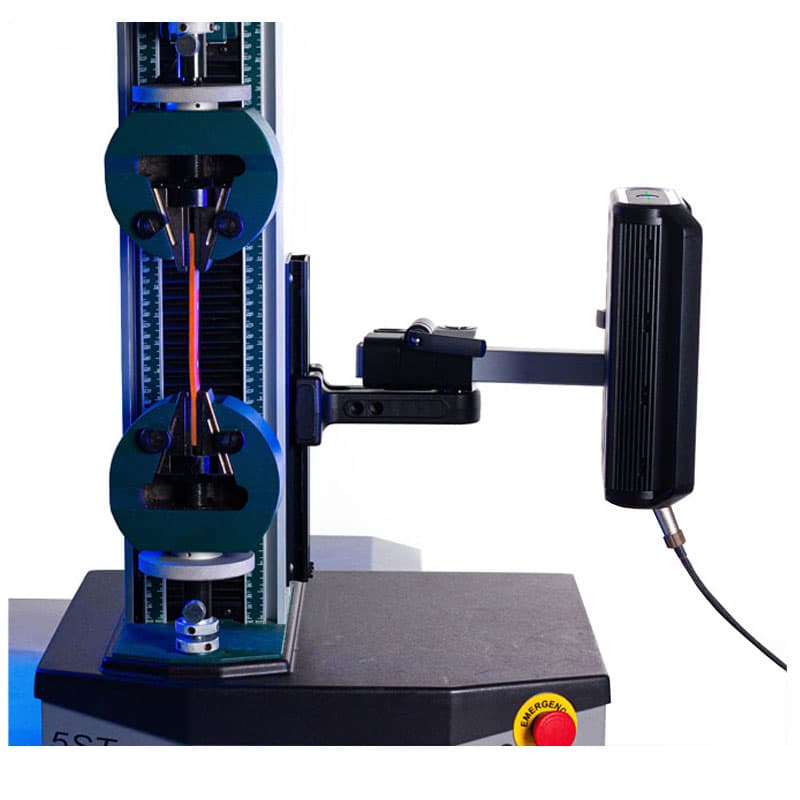
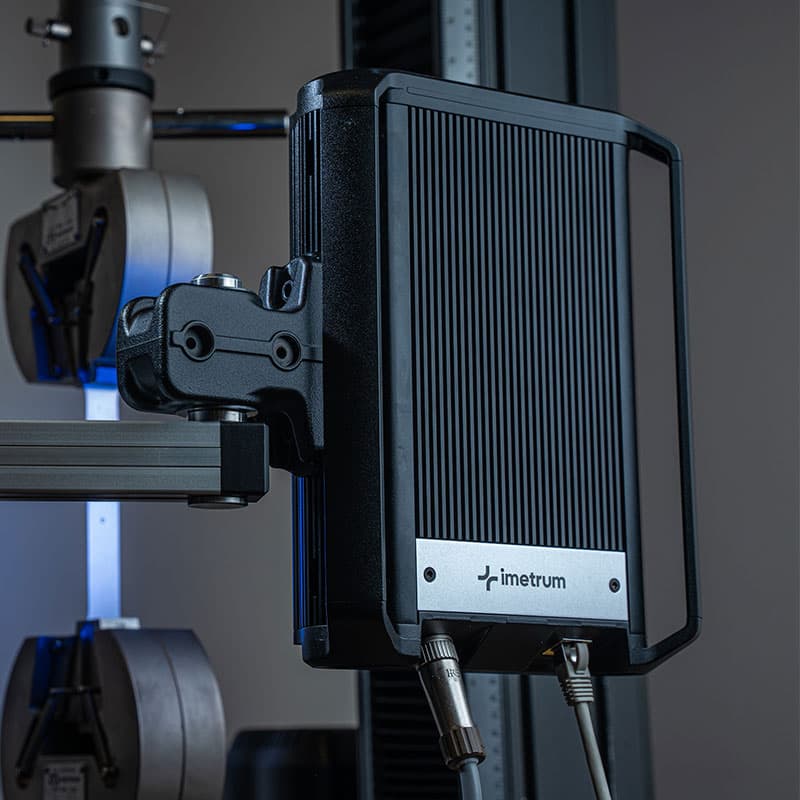
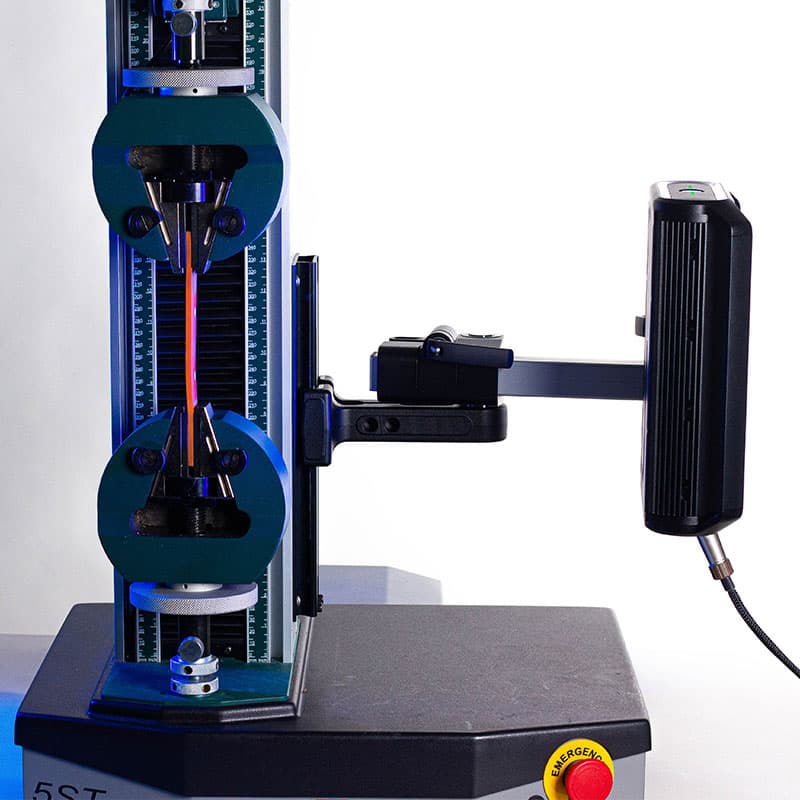
The Vector U70 non-contact extensometer is designed for testing small to medium specimens, with a gauge length of 10-50mm and widths larger than 2mm.
It combines adaptive AI capabilities with optical hardware, automating the strain-capturing process and improving operator safety, measurement accuracy, and data consistency while lowering test throughput times and complexity.
Price on quotation
Benefits
- Increased throughput — non-contact design enables faster testing, especially in non-ambient conditions. This means no time is lost attaching or removing clip-ons, meaning more specimens tested in less time.
- Delivers uniaxial strain measurement over a wide range of materials, gauge lengths, and set-ups that all meet or exceed ISO 9513 Class 0.5 and ASTM E83 Class B-1.
- Operating distance of 280 to 320mm.
- Cost-effective — available at a comparable price to a Clip-on to reduce testing costs and drive faster ROI.
- Intuitive design — get up and running with four easy steps: Install, Mark, Align, and Measure.
- Laser alignment guides, status indicator lights, and a flexible operating distance all assist the operator during setup and use.
- Operates in harsh environments, challenging light conditions, and temperature chambers with no loss of functionality.
- Tests highly fragile specimens without impacting them.
- Avoid introducing stress concentrations, such as damage from knife-edge contact.
- Lower cost of ownership — With class-leading performance right out of the box, Vector eliminates the need for specialist high-temperature clip-ons and reduces maintenance overhead, resulting in fewer parts, fewer failures, and lower costs.
- Superior data quality — Simply point Vector at a properly marked specimen to capture accurate, consistent results. Operator variability is eliminated, ensuring reliable data every time.
- Various marking options are available, depending on the material. These options include rings and speckles.
- Lightweight operation and convenient integration.
- Easy to understand feedback from both the Vector software interface and Vector itself provides immediate confirmation of the state of the module.
- Extension and strain ranges are specified, providing clear guidance on performance for supported gauge lengths and allowing for easier 1:1 comparison with clip-ons. This makes it easier for users, particularly those familiar with clip-on extensometer spec sheets, to quickly determine whether a specific Vector configuration meets their testing requirements.
- Recommended operational temperature range of -100°C to +370°C. This is ideal for use in environmental chambers. We can also provide guidance that often enables accurate results at temperatures far exceeding 370°C.
- Extensometer calibration service available.
Measurement applications
Uniaxial, tensile, compressive, or flexural.
Vector Quick Start Guide
The following guide explains the basics to achieve extensometry measurement: Vector-Quick-Start-Guide
- Measurement modes: Strain (%) or displacement (mm/inches)
- Field of view: 70H x 40D x 25W mm cuboid
- Resolution: <0.5 μm
- Extensometer accuracy class: Meets or exceeds ISO 9513 Class 0.5 and ASTM E83 Class B-1 capable
- Gauge lengths supported: 10-50mm
- Real time strain data rate: 150 Hz
- Minimal specimen width: 2mm flat, 2.5mm diameter round
- Minimal recommended specimen parallel section: 16mm
- Maximum tracking speed: 2500 mm/min
- Strain control: Compliant to ISO 6892 and ASTM E8
- Operating distance: 280 to 320 mm
- Strain signal interface: Analogue ±10V BNC
- Supported mark types: Rings, filled circles and speckles automatically detected
- Recommended specimen temperature range: -100 to +370ºC
- Dimensions: 252H x 73D x 201W mm
- Weight (Vector module only): 3.1 kg