



We’re here to help
Let us help you
Accurately capturing and evaluating colour is vital for helping manufacturers and researchers check the colour and clarity of their materials and products. This requires quantitative data that calculates and details colour in a precise and objective way, replacing subjective human visual assessment.
A quality test instrument known as a colour spectrophotometer is widely used in the field of colour measurement, offering unparalleled accuracy and objectivity in colour quantification. Capable of determining the colour of a huge range of materials, including liquid, metal, paper, and painted samples, let’s take a closer look at these highly sensitive instruments, so you’re left with no grey areas.
A spectrophotometer is a colour analysis device that enables you to repeatably and traceably measure and control colour data. This spectral colour data can be provided for just about any sample and is typically not detected by the human eye.
Spectrophotometers offer a non-invasive way of measuring how a material interacts with light. This is achieved by shining a beam of light onto the substrate and capturing the lightwaves reflected back or transmitted through to quantify colour.
Breaking down a colour spectrophotometer into its key parts is the easiest way to understand how everything works together to translate colour into interpretable data for easier communication.
There are three types of colour spectrophotometers to suit your operation’s demands. They’re available in different shapes and sizes, so take a look at the different options below to find the right instrument for your research needs.
Benchtop Spectrophotometers
Benchtop spectrophotometers like the ColorTouch X Spectrophotometer (pictured below) offer supreme levels of colour precision and control, making them ideal for laboratory-based operations. They have the highest level of repeatability, with their no-directional geometry offering a unique measurement method that eliminates contact with your sample.
This technology ensures sample integrity by preventing damage to the sample, as well as reducing sample preparation and clean-up time.
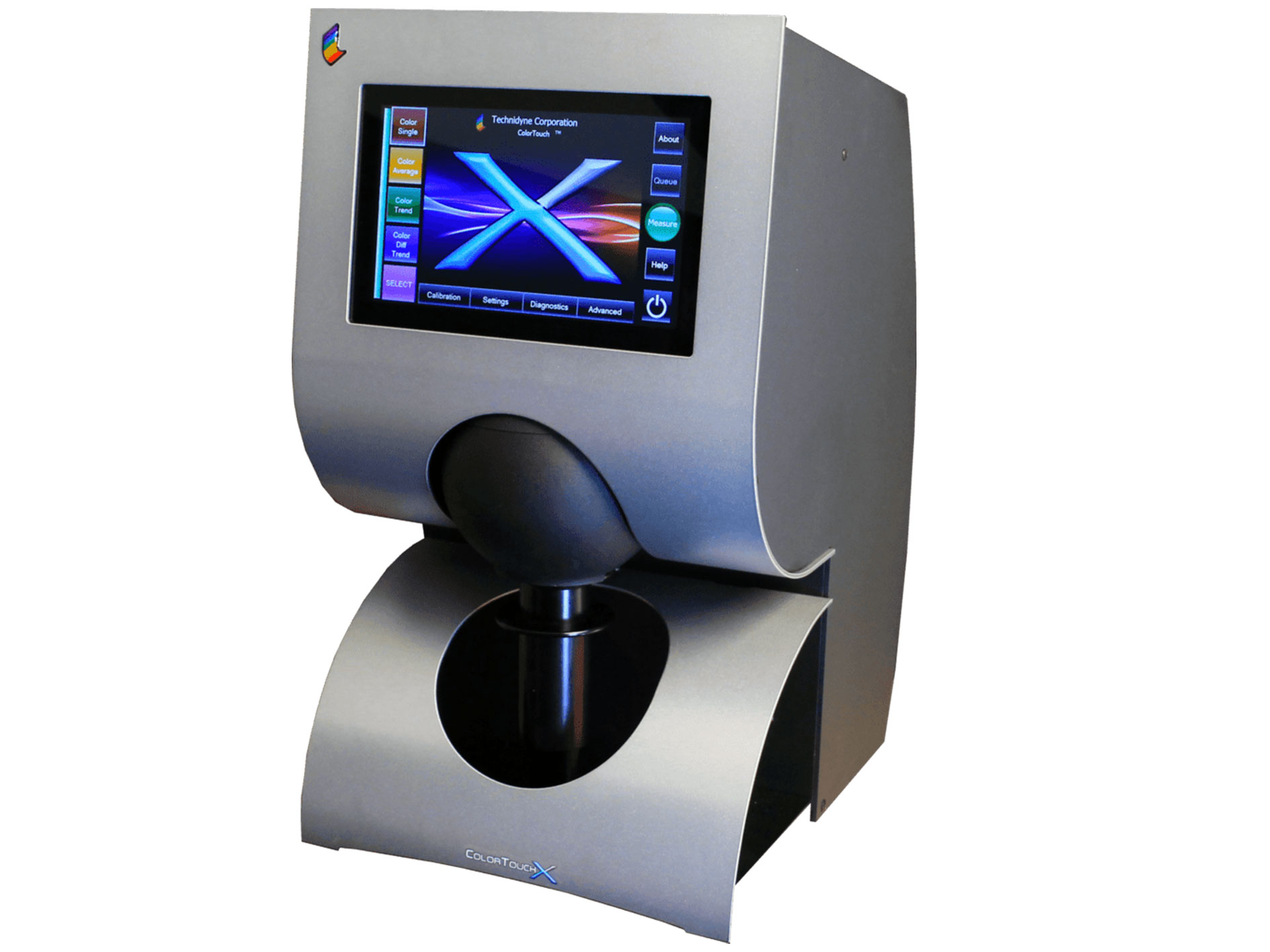
ColorTouch X benchtop spectrophotometer with touchscreen interface for colour analysis.
Portable Spectrophotometers
Naturally smaller and more mobile than their benchtop counterparts, handheld colour spectrophotometers are practical for colour measurement capture for on-site and field applications.
They allow researchers and technicians to perform analyses in remote locations without the need for large and stationary equipment.
Inline Spectrophotometers
Also known as an in-process spectrophotometer, an in-line model is installed in your production run to evaluate your colour testing processes by providing real-time continuous colour data. For instance, a textiles manufacturer needing to maintain uniform colour in their fabrics during a production run. These machines will also notify the operator of any colour drift, so it can be corrected before a failure occurs.
Taking accurate colour measurements is critical for many industries and applications, helping colours remain consistent throughout the manufacturing process. This powerful tool also helps brands find the most desirable colours for their audience and keep their products coherent, even if they’re being manufactured in multiple locations worldwide.
Some on the most common spectrophotometer industries and applications include:
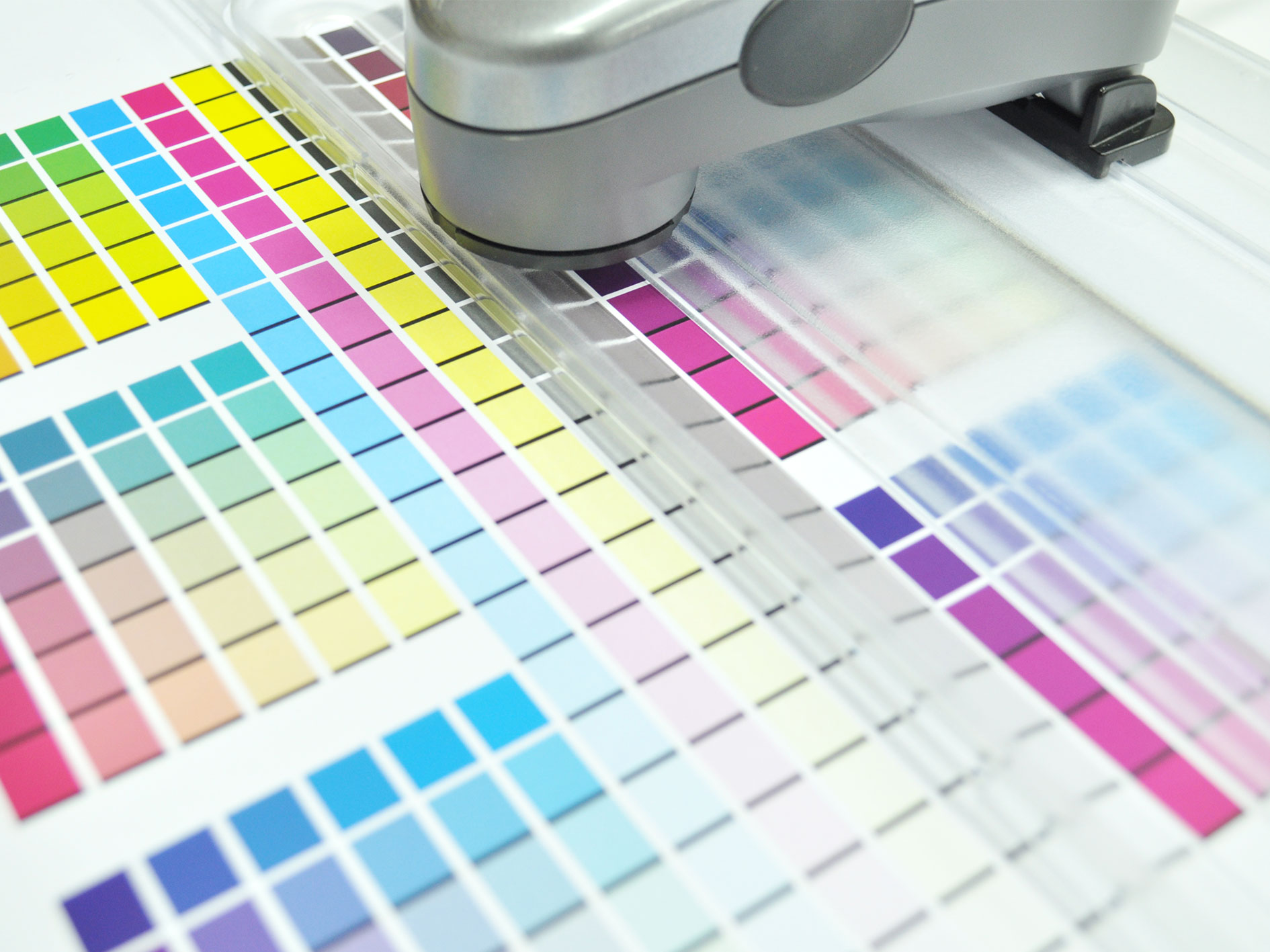
Spectrophotometer scanning printed colour swatches for colour accuracy in print quality control.
Different spectrophotometer applications require varying levels of accuracy, precision, and repeatability. For example, colour matching of pills in the pharmaceutical industry will require much tighter colour and spectral tolerances than a researcher tasked with evaluating dye fastness.
ASTM International set the technical standards for measuring, managing, and communicating colour, helping manufacturers and researchers conform to in-depth colour measurements and the highest colour and appearance standards. By following their guidelines, you’ll be able to establish and adhere to precise colour measurement conditions.
Many industries have specific industry scales or indices they use to ensure their products conform to these standards. If we take one at random, ASTM D1500 is a specific liquid colour scale for petroleum oils, ranging from 0.5 to 8.0. It’s relied on heavily by the petrochemical and refining industry to determine the colour of petroleum products.
But don’t forget your spectrophotometer can only provide accurate, high-resolution results and meet testing standards if it’s regularly calibrated.
Spectrophotometers are more expensive, complex, powerful, and versatile than colorimeters, making them the go-to for detailed and precise colour measurements. This means they work well for different types of samples and measurements.
Colorimeters are more common in basic manufacturing and production applications, such as quality control. However, choosing the best colour measurement instrument depends on numerous factors such as instrument geometry and your precision and accuracy needs.
AML Instruments offer a comprehensive range of modern spectrophotometric instruments designed to translate the sensory experience of colour into interpretable data for easier communications.
As an ISO 17025 accredited laboratory, we also provide high-quality colour measuring spectrophotometer calibration services, with on-site and off-site options available.
Whether you’re in the field, the lab, or on the factory floor, get in touch to see how our friendly, knowledgeable team can help you measure and control your colour data.
Let us help you