Prima PN
Manufactured by Life Testing Machines
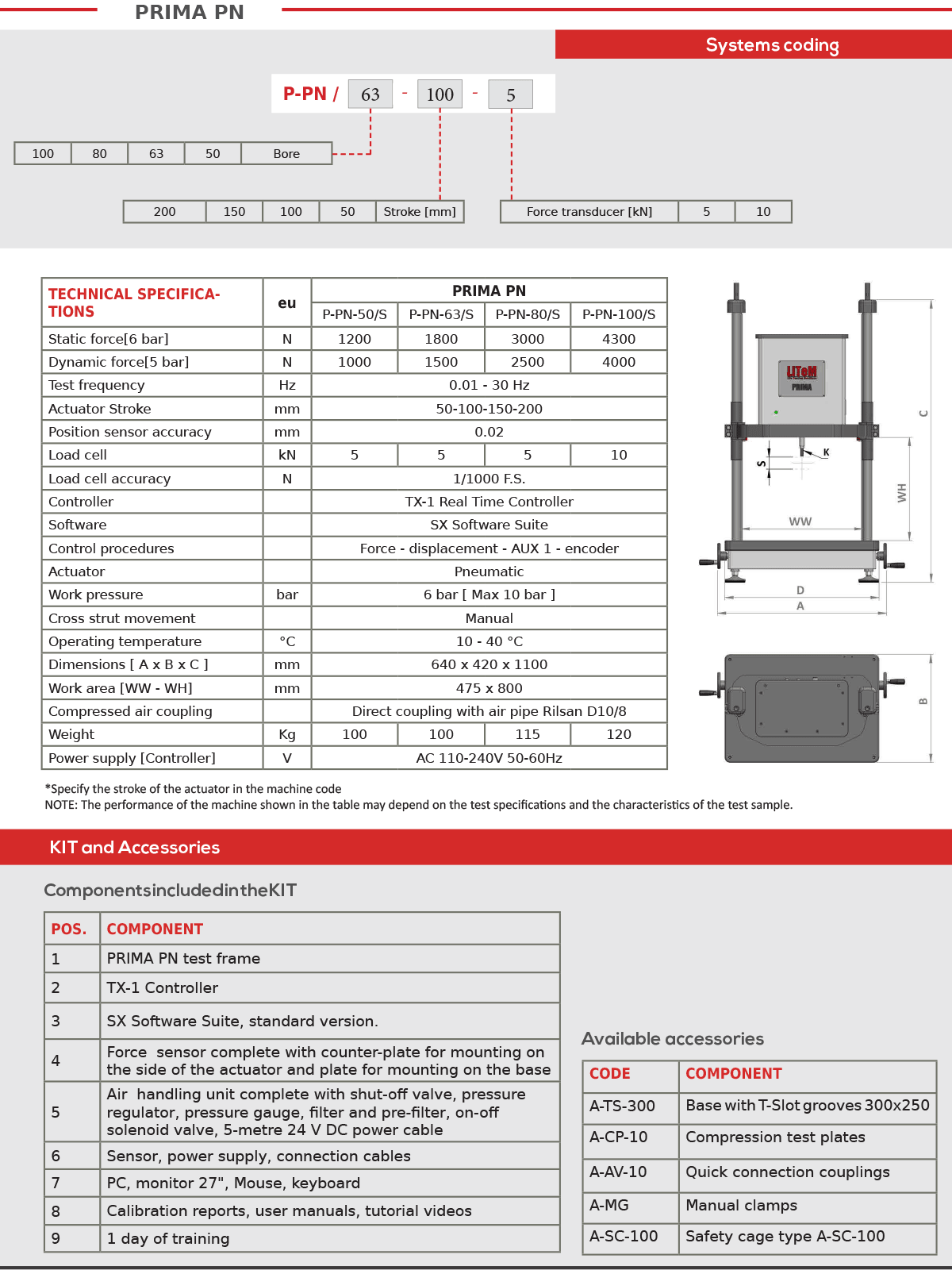
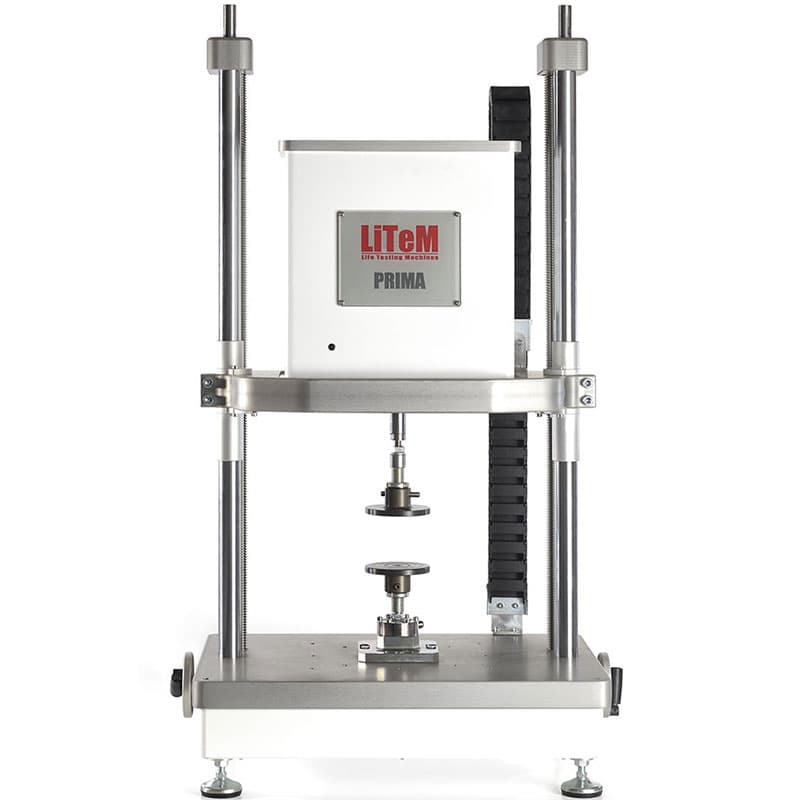
The Prima PN fatigue testing apparatus features a pneumatic actuator. It’s engineered for versatility and capable of performing static, semi-static, dynamic, and fatigue tests on various components and materials, including plastics, rubbers, and springs.
When integrated with the TX-1 controller and its accompanying SX software (both included as standard), the Prima PN transforms into a practical system, perfect for ensuring accurate and consistent results in various industries from 3D printing and biomedical to research and development.
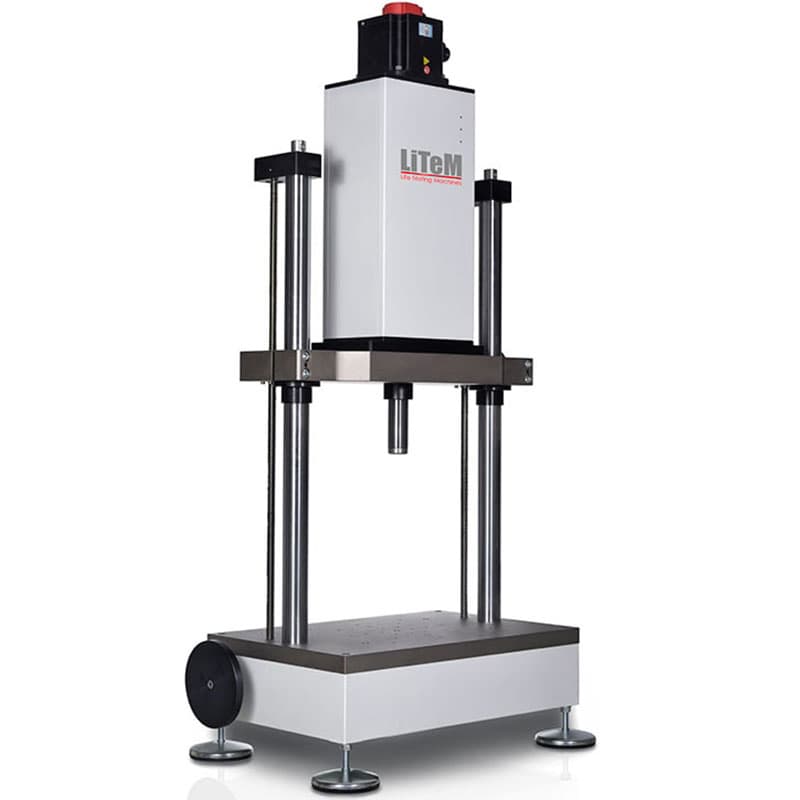
Its eye-catching, user-friendly design includes a movable cross strut and a spacious work surface, making the process of securing and handling even the most complex samples a breeze.
Price on quotation
Benefits
- Perfect test machine for companies aiming to approach the world of cyclical tests.
- “Tabletop” configuration offers a compact footprint, meaning the machine fits easily onto standard laboratory benches.
- Test frequency up to 30Hz.
- Lightweight and rigid test frame, made with double column and actuator assembled on the top cross strut.
- Completely oil-free mechanics with low power consumption.
- High number of compatible accessories (See Specifications tab).
- Test capacity from 50 to 4000 N.
- Stroke from 1 to 200 mm.
The adaptability of the Prima PN fatigue testing machine, underscored by its capability to accommodate numerous configurations through different pneumatic actuator strokes, makes it exceptionally suitable for a broad spectrum of applications. Its straightforward and user-friendly software interface renders the Prima PN series an ideal choice for industries such as:
- Biomedical: For testing medical devices and implants under varying pressures and conditions.
- R&D: Supporting research and development with its versatile testing capabilities.
- Plastics and Rubber: Assessing the properties of plastic and rubber materials under stress.
- 3D Printing (Plastics and Metals): Evaluating the strength and durability of 3D-printed objects.
- Composite Materials: Testing the resilience and performance of composite materials.
- Springs: Measuring the tension, compression, and endurance of springs.
- Mechanical Components: Determining the durability and functionality of various mechanical parts.